

Understanding Research Peptides: What They Are and Why Quality Matters
Research peptides are short chains of amino acids used in laboratory studies to explore cell signaling, receptor binding, and protein function. Here's how they're made, how purity is verified, and why sourcing quality matters for reliable, reproducible results.
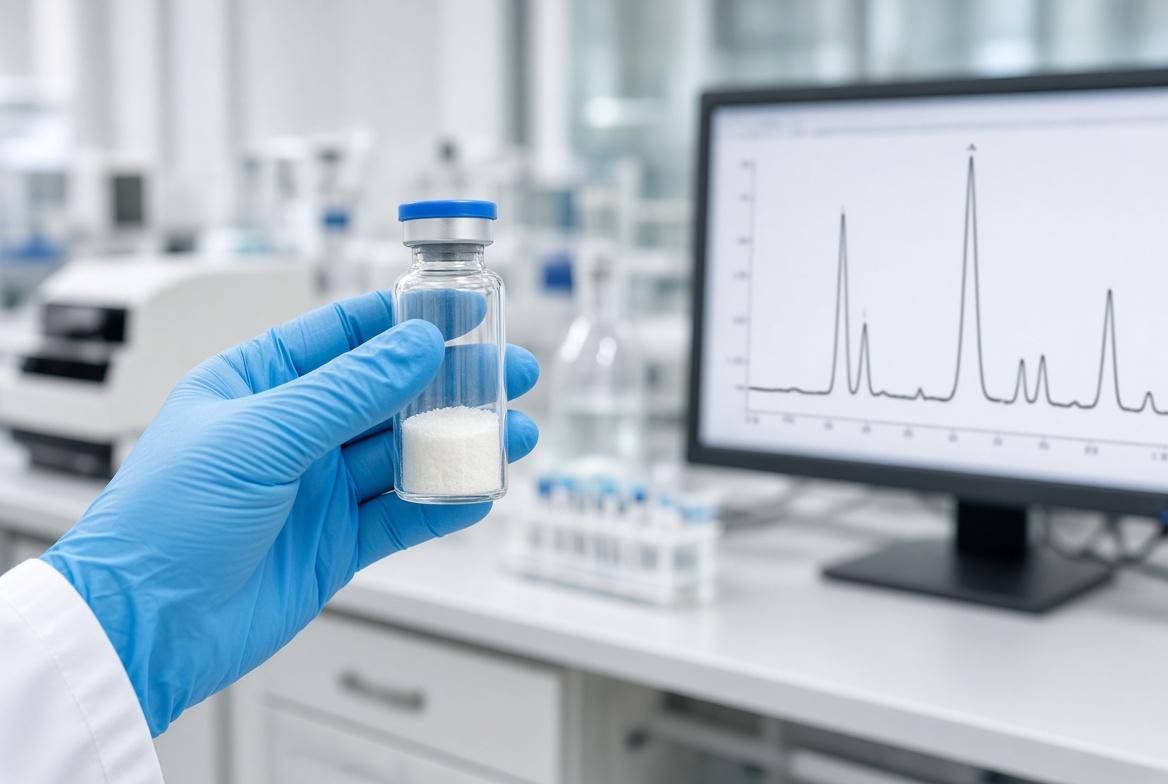
What Are Research Peptides?
Peptides are short chains of amino acids joined by peptide bonds. They're usually defined as sequences of about 2 to 50 amino acids, which sets them apart from larger proteins. In the laboratory, synthetic peptides are valuable tools because their sequences can be designed precisely, made consistently, and studied under controlled conditions.
Research peptides are made specifically for in-vitro and laboratory research. Scientists use them to study things like:
- Cell signaling pathways: how molecules communicate within and between cells
- Receptor binding: how specific sequences interact with target receptors
- Enzyme activity: how peptides act as substrates or inhibitors in biochemical assays
- Structure and function: how changes in a sequence affect stability, folding, and behavior
All PrimeNexa Labz products are sold strictly For Research Use Only. They are not for human or animal consumption, and they are not drugs, foods, or cosmetics.
How Research Peptides Are Made
Most research peptides are produced by solid-phase peptide synthesis (SPPS). In SPPS, amino acids are added one at a time to a growing chain anchored to a solid resin support. After each coupling step, excess reagents are washed away, and the finished peptide is then cleaved from the resin.
After synthesis, the crude peptide goes through several more steps:
- Purification: usually by preparative high-performance liquid chromatography (HPLC), to separate the target peptide from truncated sequences and byproducts
- Lyophilization: freeze-drying the purified peptide into a stable powder for storage and shipping
- Analytical verification: confirming identity and purity before release
Each step affects the quality of the final material, which is why the supplier's process matters as much as the sequence itself.
Why Quality Matters in Peptide Research
In research, your results are only as reliable as your materials. An impure or mislabeled peptide can introduce variables you can't see, leading to inconsistent data, failed replications, and wasted time and budget.
Purity
Synthesis can leave behind impurities such as deletion sequences (missing an amino acid), truncated chains, or residual reagents. Even small amounts can interfere with sensitive assays. High-purity material reduces that background noise and makes your results easier to interpret.
Identity
A peptide must actually be the sequence on the label. Confirming the molecular weight ensures you're studying the compound you intended to study.
Consistency
Reproducibility depends on getting the same material from batch to batch. Lot tracking and per-batch testing help researchers compare results across experiments over time.
What to Look for on a COA
When you review a COA, check for:
- Product name and lot or batch number matching your vial
- Purity percentage from HPLC, ideally with the chromatogram attached
- Observed vs. expected molecular weight from mass spectrometry
- Test date and the name of the testing lab
- Appearance and form, such as a white lyophilized powder
Tip: If a supplier can't provide a batch-specific COA, treat that as a red flag.
Learn more in our guide to reading a Certificate of Analysis.
Storage and Handling Basics
Proper handling protects the material you paid for:
- Store lyophilized peptides cold. Long-term storage is typically at -20°C or below, away from light and moisture.
- Limit freeze-thaw cycles. Aliquoting helps keep the material stable.
- Let vials reach room temperature before opening to reduce moisture condensation.
- Follow the product's specifications and your lab's standard operating procedures.
We'll cover storage and reconstitution protocols in more detail in an upcoming article.
Choosing a Research Peptide Supplier
When you evaluate a supplier, look for:
- Batch-specific, third-party COAs with HPLC and MS data
- Transparent product information and lot tracking
- Clear Research Use Only labeling and compliance practices
- Proper cold-chain-aware packaging and shipping
- Responsive support for technical questions
At PrimeNexa Labz, quality verification and transparency are part of every order. Browse our research catalog.
Frequently Asked Questions
What's the difference between a peptide and a protein?
Peptides are shorter chains of amino acids, generally up to about 50 residues. Proteins are longer and usually fold into more complex three-dimensional structures.
What purity level should I look for?
It depends on the application, but many research applications call for high-purity material confirmed by HPLC. Always check the batch-specific COA.
Are research peptides safe for personal use?
No. Research peptides are intended only for laboratory research by qualified professionals. They are not for human or animal consumption.
Why are peptides shipped as a powder?
Lyophilized (freeze-dried) peptides are generally more stable than peptides in solution, which helps preserve them during shipping and storage.
Disclaimer: All products sold by PrimeNexa Labz are intended For Research Use Only and are Not for Human Consumption. They are not intended to diagnose, treat, cure, or prevent any disease. This content is for educational and informational purposes only and does not constitute medical advice.